
Made Up
Cosmetics and Medical Misogyny

I usually don’t post on Mondays, and I am behind on my regular bi-weekly schedule. Part of that is because I’ve been sitting on this post for nearly a week, unsure whether I would publish it. I ultimately decided that I had to for reasons I go into below. That said, content warning: a discussion of Epstein’s Island appears here.
Last week, I had a doctor’s appointment. Actually, I had multiple doctors’ appointments—four, if we’re counting, which I was. But for this one, I put on makeup, which I don’t usually do these days. Most people see my naked face. The exceptions are usually in professional contexts where I am interacting with strangers.
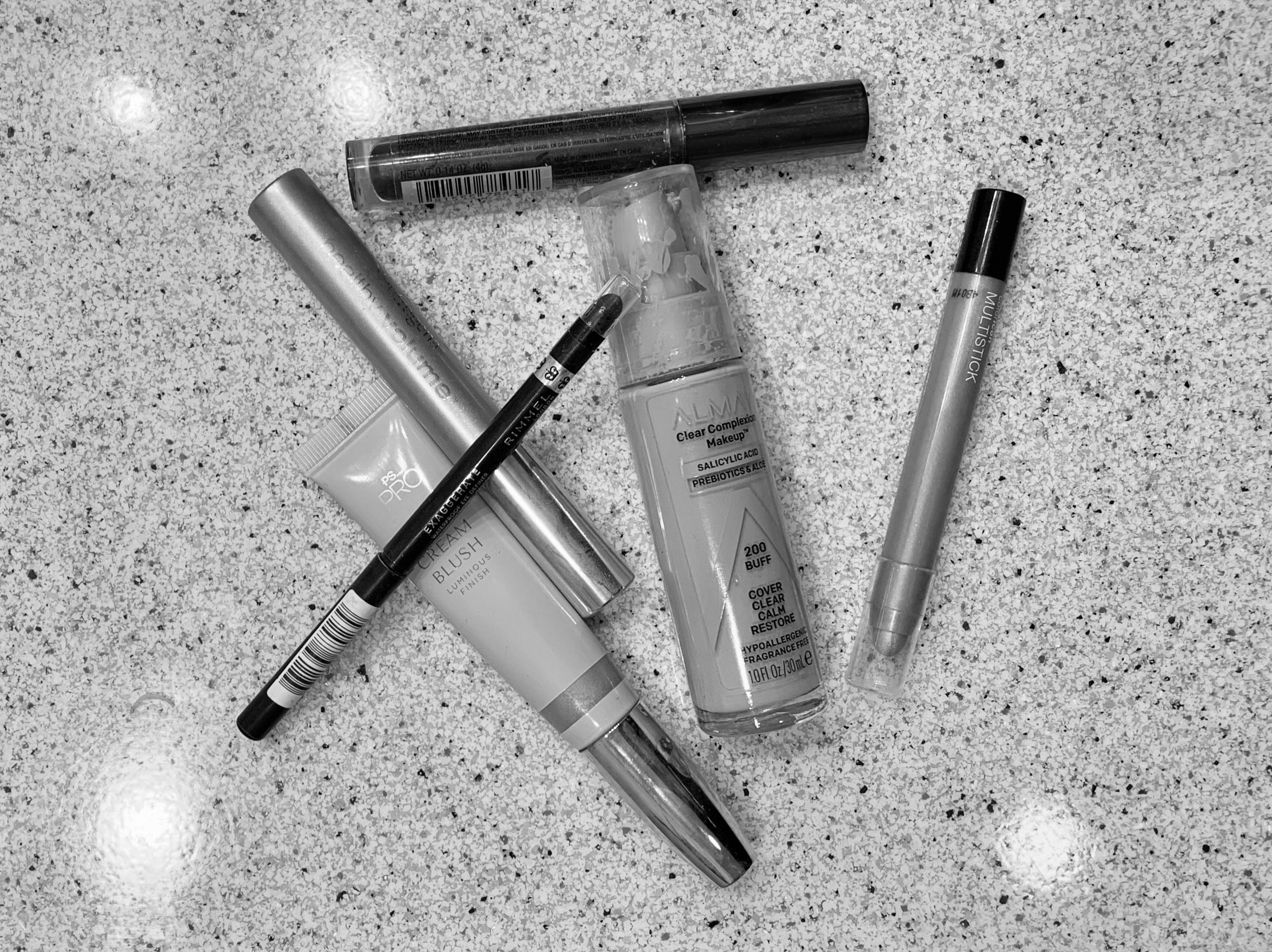
Makeup, before I retired, was a daily practice. I grew up in the 80s when the expectations were either bold (pink, blue, and silver eyeshadow and blush the color of a deep pink bruise swiped on in a harsh line for the high school dance team) or “natural” (makeup that didn’t look like makeup). I trended natural and kept my routine for decades.
There’s a lot to love about makeup as self-expression and artistry—my daughter and I cannot WAIT for the new season of Glow Up—but it is also implicated in all kinds of gender conventions and control. Makeup can be about how we see ourselves, but it is also about how others see us. As John Berger says in Ways of Seeing, women watch themselves being watched, always anticipating what impact their appearance will have and what that means for how they will be treated. It’s a survival mechanism. Makeup is always part performance.
I don’t perform much these days, not with friends, not with my writing groups, and by and large, not with doctors. Except this one. This doctor has a reputation throughout our local healthcare network for preferring thinness and seeing extra weight as a lack of discipline—and a lack of virtue. The morning of my appointment, the scale told me that I am thirty pounds heavier than when he last saw me. I knew the weight comments were coming.
But beyond weight, this doctor has dropped enough comments critical of DEI for me to know there’s an edge of misogyny to his biases. I knew that I would have a better interaction with him, and therefore likely get better medical care, the more closely I could conform to conventional beauty standards for white women. (And yes, I know: “find a new doctor!” But I live in a rural area that is a medical desert. There simply isn’t a lot of choice.) So, on went the foundation, the contouring, the eyeshadow, the eyeliner, the mascara, the blush, and the lipstick. I was manipulating him, and I resented the need to do so.
Here is the thing, friends. I forgot that as Audre Lourde says, you can’t dismantle the master’s house using the master’s tools.
The doctor did not comment about my weight.
Instead, after talking a bit about problems in and with academia since he knew I had been a professor, he mentioned that leaders of elite academic institutions needed to show good judgment. The Dean of Harvard (by which he meant Harvard President Larry Summers), for instance, showed bad judgment by going to Epstein’s Island and then maintaining contact with him. I believe I said, “yeah, you think?”
My doctor said, very seriously, “Epstein’s Island was not really about sexual abuse.”
I’m sorry, but what the fuck? My mouth didn’t say it, but my face probably did.
Really, he told me, it was about blackmailing powerful men. I pushed back. “Surely,” I said, “you agree that it was about sexual abuse for the VICTIMS.” He didn’t have a comment about that. Instead, he explained that Epstein used sixteen- and seventeen-year-old girls who the middle-aged targets probably thought were of age in order to get blackmail material on these men. Also, he told me, that’s not pedophilia—there’s a different term for being attracted to someone who is physically mature but maybe not mentally or emotionally so. Yeah, I wanted to say, and that term is “criminal asshole.”
I didn’t say that. I did say, “What about the 8-, 9-, and 13-year-olds?”
“Well,” he said, “we don’t know where that happened.”
I turned and got my coat because I needed to end the conversation. “Right,” he said. “The nurse will be back with your paperwork. It was nice talking with you.” And he meant it. He thought that was a good conversation, that we had come to some sort of agreement. That somehow, I would be fine with a man taking a situation in which girls and boys, children and teens, had been horribly abused, and making it all about the men who had done the abusing.
This was my doctor, who is in a position of power, upon whom I depend for my medical care—medical care that is not optional. Me, a woman. With a history he knows absolutely nothing about, that could really contain anything. And statistically speaking, probably does.
I held off writing about this experience for a number of reasons. The first was a simple, straightforward one: if I complain or expose what happened, what does that mean for my medical care? (Remember: medical desert.) The second had to do with shame: shame that I hadn’t said outright, to his face, that the conversation was unacceptable, despite the fury that incapacitated me for two days after. Shame that I thought that makeup would somehow mitigate misogyny. I tried to play the game and got played. And the game, this shit, is everywhere.
As so many women on social media say: not all men, but always a man. A new King’s College London survey of over 23,000 subjects across 24 countries indicates that 30% of GenZ men think women should be subservient to their husbands, 33% that men should have the final say on all major decisions, and 24% that women should take care not to appear too independent. Fifty-seven percent of GenZ men said that society has done too much to promote women’s equality, and 59% said men are expected to do too much to support that equality. And for those men who don’t hold these beliefs—how many of them are actively trying to dismantle the systems and ideologies that uphold them?
Women are fucking tired. And we—I—still have to stand up and say something because, honestly, what other choice do we have?
The results of the King’s College London survey: IWD 2026 Global Charts
Hard to write and publish, I know, but really important and powerful for that same reason. I know it didn’t feel like enough, but I’m still impressed you said as much as you did. Especially since drs offices can often make us feel our most vulnerable.
I'm so glad you published this. I also live in a medical desert and you have to take what you can take sometimes to get what you need. AND the rage I feel over how I have to spend my time to, as you so beautifully said, "manipulate" the male dr into hopefully giving you better care. The casualness of this encounter is so familiar in so many aspects of moving through the world as a woman that I can't say anything else besides, Brava! And also I'm so f**king tired and angry. Just so tired. xox